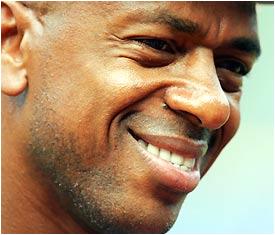
But it seems as though he would never stop smiling. Nearly every one of his peers would have never even considered the thought of moving to a foreign country that spoke a language he did not, away from everyone he'd ever known in his forty-plus years, just so he could play baseball. And since his peers play in a league in which players recovering from injury often refuse brief spots on a minor-league roster solely out of pride, we can be certain that most who did decide to play abroad would feel at least slightly ashamed or insecure about it.
None of those feelings ever seemed to occur to Franco. He likely recognized that he was paid more than 99.9% of the world to play a game he would have probably played for free.
It's doubtful that Franco intended to teach a lesson here, but one can clearly be learned. Part of the reason behind Franco's relative longevity can be attributed to his work ethic, talent, and bodily maintenance, but part of it certainly is that people write themselves off too early. They're disappointed if they don't meet expectations, but so long as they do, they let examples of those who have gone before decide their end for them, without putting together the idea that those who came before took a cue from those who came before them, and so ad infinitum. But in reality, it's ludicrous to believe that players should retire when they hit 40, or that a 50-year-old divorcee is too old to find love again, or that a 25-year-old is too old to go back to school. It's useful to heed the example of others, but too often, we take them as rules rather than the mere suggestions they are.