

| Proud Member Of |
Terrorism is when a person or group of people use an act of violence to try and get what they want. They use the violence to make people afraid so that the people will do whatever they're told. Terrorism is a dangerous thing, which is why you have to pay close attention to what we tell you or you could die at any moment.
Unfortunately, we don't always know where, how or when a terrorist will attack. There are a number of probable targets that seem the most likely choices.
1. San Francisco
Additionally, terrorists can attack in a number of ways. The only way to be safe is to have a plan for all of them. The most common methods are:
You have nothing to be afraid of. In the hundreds of years our great country has been in existence, no one has ever dropped bombs on the US.
Pearl Harbor is in Hawaii. No one has ever dropped bombs on the real United States.
Well, the most important thing to do is to have a plan, and a Disaster Preparedness Kit. Ask your parents if they have either or both. If they don't, they're not very good parents. It's possible they don't love you. All the same, you should goad them into making a kit with you, and then draw up plans for escape routes for leaving town, in the event that extremists decide their next most viable target is the Hyde Park suburb.
Here are some suggestions for what your kit should include.
 You've probably heard a lot of talk from your parents and on the news about something called "terrorism." It all sounds pretty scary, and you may be unsure of what to do or think after all this. Luckily, that's why the President established the Department of Homeland Security, so you don't have to think anymore. We're here to hopefully answer some of the questions you may have, and help you be better informed about what to do in case of an emergency, be it natural or man-made.
1. What is terrorism?
2. What should we look out for next?
2. Chicago
3. Fort Knox
4. The soccer field you practice on
 Explosion: A bomb, combustible material set aflame or A 350 TON PASSENGER JET is used to damage people and property, usually in dense urban areas. Damage dealt can vary widely based on materials used. If you have ever dropped a cherry bomb into a toilet, you are a terrorist.
 Chemical: The release of toxic substances into the air, water, ground, or anywhere else that can affect living things. At the Ready.gov main site, we mention some signs that may mean there has been a chemical attack: "Many people suffering from watery eyes, twitching, choking, having trouble breathing or losing coordination. Many sick or dead birds, fish or small animals are also cause for suspicion." An additional sign that you may be inhaling toxic gas is if you're surrounded by animal corpses and throngs of twitching, vomiting people and you need someone to tell you this might be a sign of an attack.
 Biological: Your parents and other blood relations pass down genes which give you a persistent urge to fill yourself with fertilizer and lay down in front of a government building while smoking.
 Nuclear: A nuclear blast creates an instantaneous blinding flash of seering heat, followed by a pressure wave radiating from the point of impact that can throw cars and rip apart buildings. This force is so immense that it leaves a vacuum in its wake, and after the wave has passed, air will rush back in to fill the void, creating a powerful suction back towards the epicenter. Things that were flying forward in the pressure wave will suddenly fly backwards in the reverse wave. It's pretty funny when you think about it!
 Dirty Bomb: No, it's not a bomb covered with mud! It's actually an explosive device that scatters radioactive material when triggered. No, radioactive material is not a bunch of new top 40 songs! It's actually material that emits harmful energy that can poison living things. No, not a Denny's Grand Slam breakfast!
 Soy Bomb: A hard to control substance used to attack crowds of people. When triggered, the core agitator will burst into spasms, stirring spores into the air carrying the Grandiloquently Aptitudinal Yearling virus. The virus is known to cause paralysis in geriatrics.
 Sex Bomb: You can give it to me when I need to come along.
3. What if terrorists drop bombs on us?
4. My daddy/mommy/aunt/uncle/legal guardian/owner told me about something called Pearl Harbor.
5. What do we do if there's an attack?
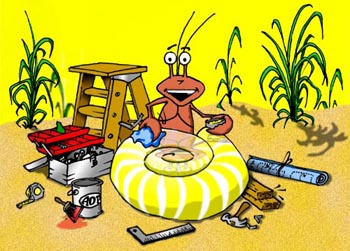
We know disasters can be scary. If you find yourself moved into an emergency shelter, or huddled in your basement, or living in the bottom of a crater in a ramshackle hut with walls of jagged debris and supports of bone cemented by your own excretions, you might be feeling a little down. Here are five important things to remember to help yourself feel better.
1. Keep a positive mental attitude. Centuries of history have been borne by man through sheer power of denial. Whenever things look grim, construct an elaborate alternate reality in which your fragile psyche may hide. Try muttering these samples repeatedly to yourself in a low voice as practice.
2. Focus on the good things. Just because the world is crumbling around you doesn't mean there isn't good that can come of this. When you get sad, just remember: You don't have to go to school! Your parents can't drag you to church anymore, because it isn't there! You're living the dream!
3. The sadness will pass. Yes, you'll have to make new friends and get used to a new town, and you miss your old friends, but they're in the ground now. You don't want to go there! Unless you are a mole man.
4. If you're feeling confused, look to your parents for help. They'll provide you with all the answers to the questions you have, like "When will I stop crying?" and "Why does God allow this to happen?".
5. You can help too! You don't have to just sit around the shelter, twiddling your thumbs. Get involved by helping clean around the shelter, watching the other kids, or repairing generators. It'll help pass the time, and it's lots of fun!
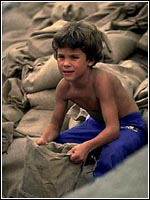
Additionally, some kids draw to help themselves feel better. It allows them to express the feelings they have inside about the things happening in our world today. Here are some examples that were sent in to us by kids just like you.
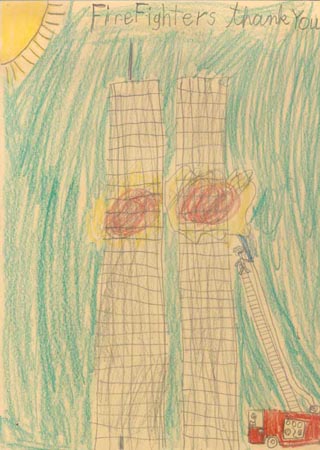
This picture was made by Susie Watson of Salmon, Idaho. Susie is a very good artist, but somewhat overestimates the abilities of firefighting equipment.
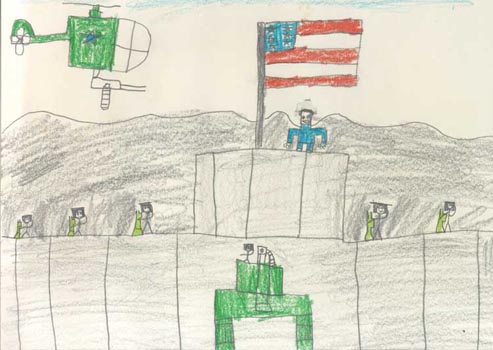
Bobby Lawson of Plattsmouth, Nebraska expresses the proper U.S. sentiment. That's why the kids call him The Diplomat.
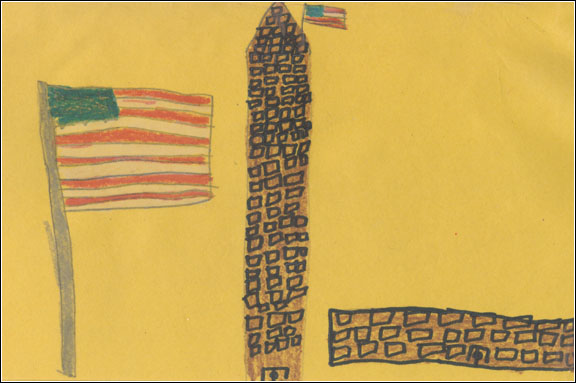
Theo Roberts sent this in from the Des Moines Institute for Obsessive Compulsive Children.
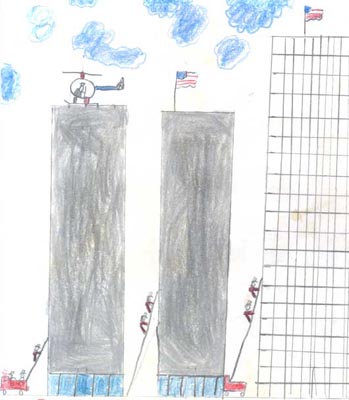
Adam Cowley of Jupiter, Florida sent in a different kind of picture. As you can see, five bridge building firemen have been deployed. You only have six builders, one climber, and three basher firefighters left. Get them all to the helicopter safely. This piece is entitled "Taxing 14."
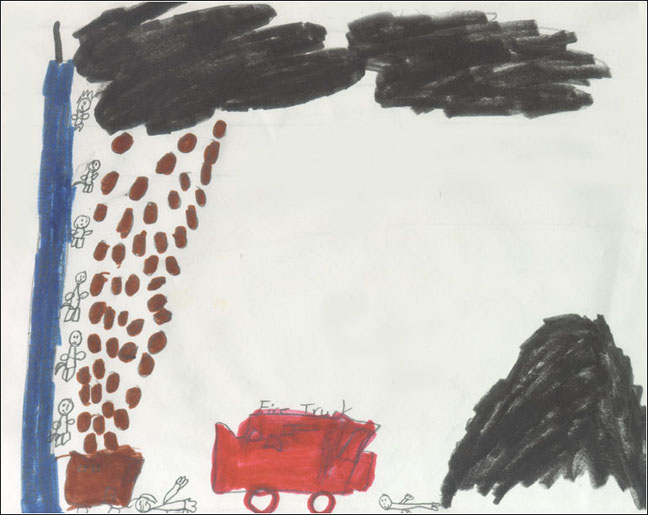
Jennifer Peters of Bodie, Nevada sent us this unique drawing after hearing from her father that the terrorist attacks in New York were going to cause a shitstorm.
Feeling inspired for some creative fun of your own? Then that means it's time for...
Take out your frustrations about terrorism in this fun action game! Guaranteed hours of entertainment! Exclamation points mean quality!
Two things that naturally go together!
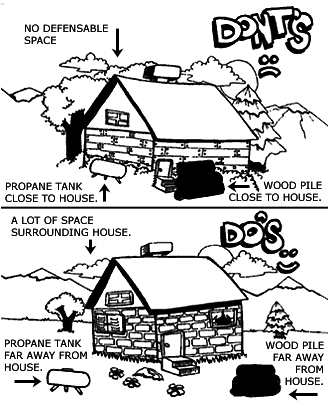
Print out these pictures and grab your favorite box of crayons. It's time to learn about disaster safety while scrawling purple blobs over people's faces.
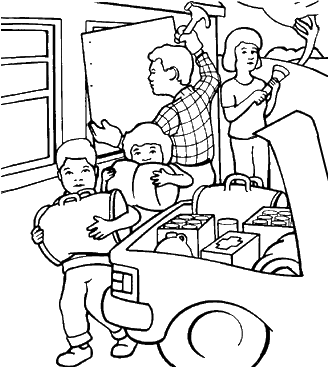
Timmy and Jenny make sure they pack plenty of clothes for their stay at the shelter. Dad's a little late on boarding up the windows, but it doesn't matter because they've removed the car's engine to fill the space with duffel bags and giant Legos.
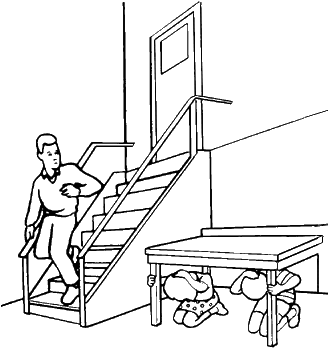
There's no room for Daddy's beer on this trip. Be sure you have a place to hide when shit goes down.
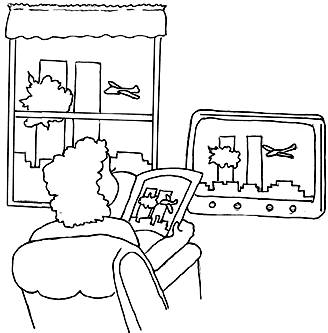
During the disaster, keep informed about what's happening by watching TV, reading the newspaper, or looking out your window. Note to yourself how remarkably up-to-date today's newspapers are.
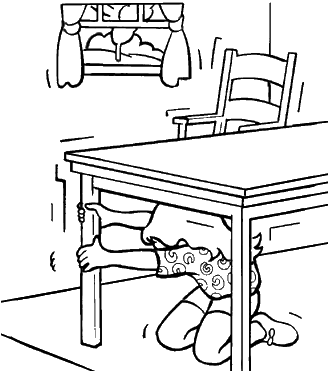
Disasters can be frustrating, and can make you feel helpless and angry. But it's important to remember that it's never okay to hurt another living thing. Instead, vent your violent tendencies on inanimate objects while imagining someone you despise. You can use the back of this page to make a list of people you wish you could choke.
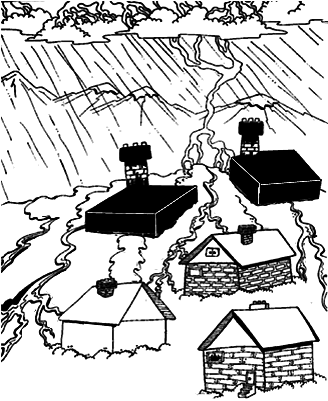
Remember: You must find shelter during a disaster. The King's battlements helped protect you from the Mongol horde, but they can't stop the rain. Against your window. They can't stop the rain. Supa dupa fly.
After the disaster has passed and you survey the damage, take a moment to reflect on the transitory nature of material wealth, and count the blessings you have.
Mom: "How horrible. Thank God we're all safe."
Dad: "WATER IS BIG"
Son: "I'll have to peruse the NFIP contracts to check if our ICC coverage works over and above the Hazard Mitigation grant for FPE compliance, elsewise we'll have to gut our Forex portfolio for the cash injection."
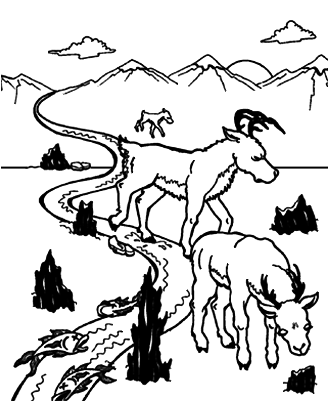
If there has been a terrorist attack using radioactive materials, prepare for slight changes in the natural environment. Learn the proper way to skin and clean a 500-foot tall antelope.
We hope this guide has helped you better understand and prepare for emergencies that may come up in the future. For more information, feel free to visit FEMA for Kids or Ready.gov. Both of which will give you plenty more to feel paranoid about. We only ask you to please ignore the irony that Ready.gov's kids section is not, in fact, ready yet. Even though it's been heavily advertised during children's programming for the last month.
- The Department of Homeland Security's Minister of Truth